6-Day Umbwe Route Trek

6 days / 5 nights
from $2,100 pp
Kilimanjaro · Umbwe Route · Uhuru Peak 5,895 m
View full itinerary

trip overview

Africa's highest peak, by its quietest northern route.

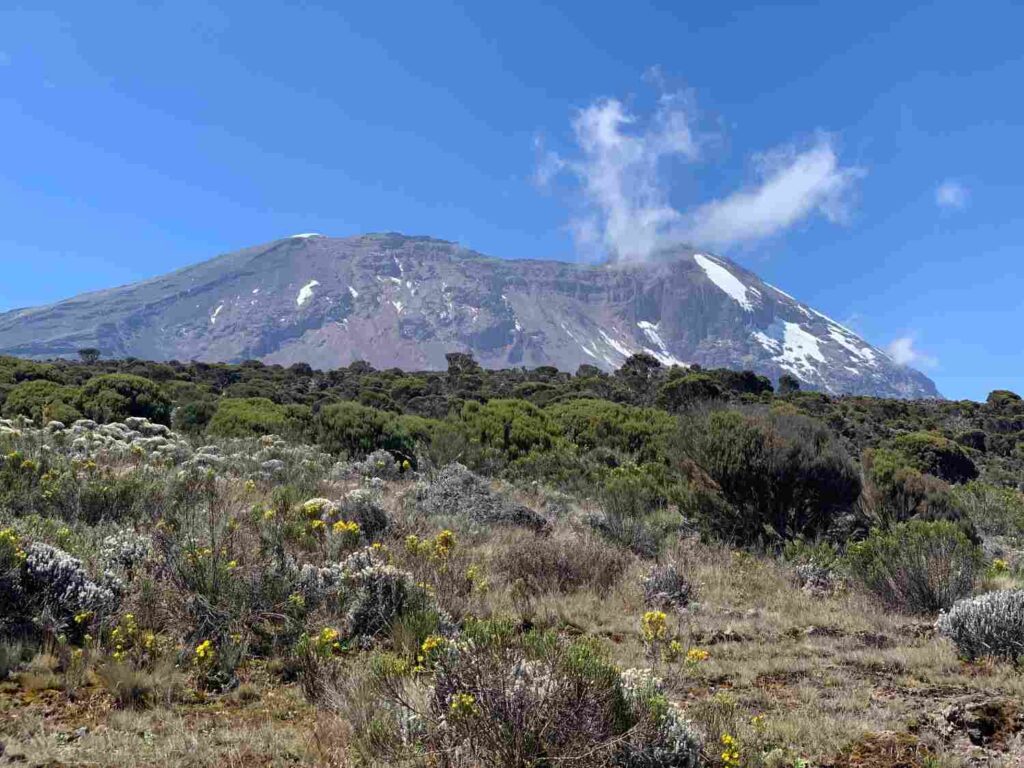
The Umbwe Route is the steepest and most direct route up Mount Kilimanjaro, approaching from the south through untouched rainforest. This 6-day trek climbs quickly through the forest to the Barranco Valley, scrambles up the Barranco Wall and joins the Southern Circuit to Barafu Camp before a pre-dawn push to Uhuru Peak at 5,895 m. You'll be supported by experienced guides, porters and a cook throughout, and descend by the Mweka Route to Mweka Gate.

Trip Highlights

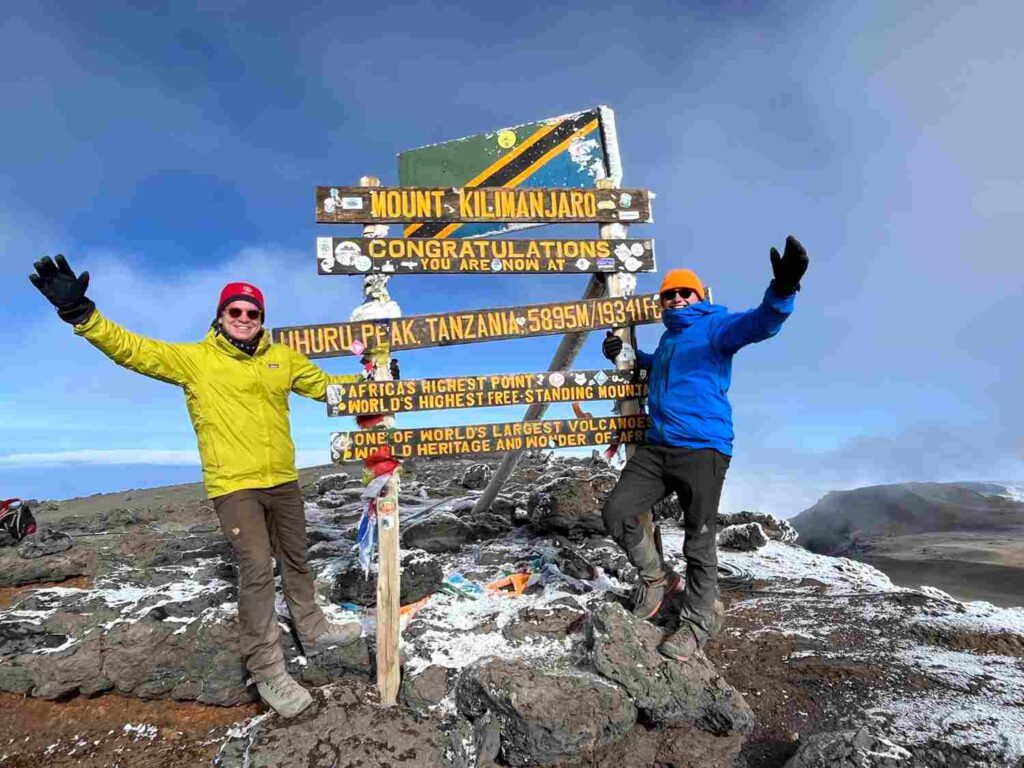
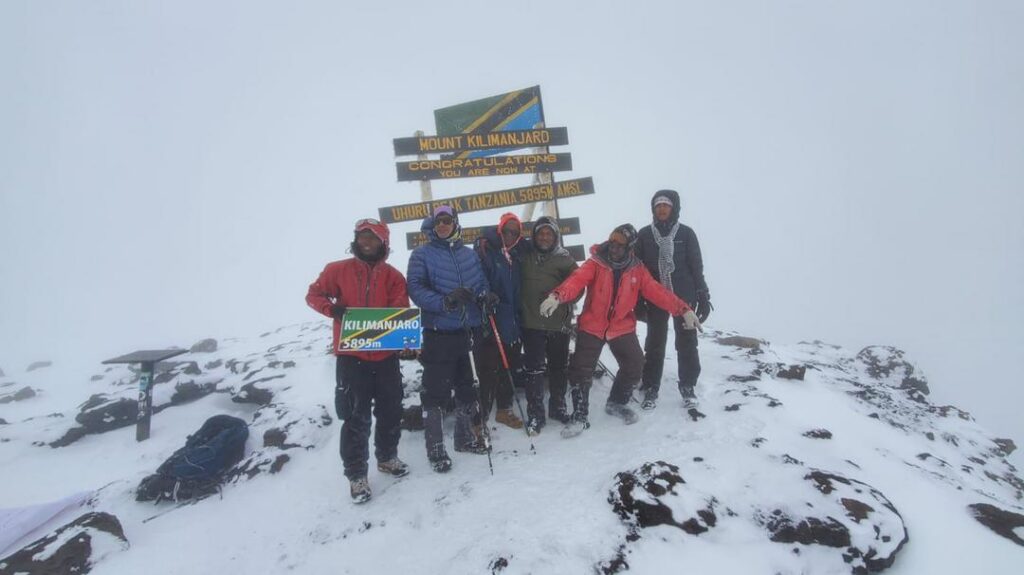
Summit Uhuru Peak at 5,895 m, the highest point in Africa
The Umbwe Route, the steepest and most direct line to the summit, with a quiet start
Scramble up the Barranco Wall and cross the Karanga Valley
Climb high, sleep low: a profile that suits fit, confident trekkers
Walk through rainforest, moorland and alpine desert to the arctic summit
Experienced guides, porters & a cook; all park & rescue fees included

day-by-day itinerary

Where you walk, how high you climb, and where you sleep each night.

You'll camp every night: at Umbwe Cave on Night 1, Barranco on Night 2, Karanga on Night 3, Barafu on Night 4 and Mweka on Night 5. Hours and distances are approximate and depend on your pace and the conditions.

Day1

Umbwe Gate to Umbwe Cave Camp

Approx. 5–6 hrs walking2,940 m / 9,646 ft

After breakfast, your guide collects you from your hotel in Moshi or Arusha and drives you to Umbwe Gate (1,400 m) on the southern side of the mountain. You'll register with the park, meet your crew and begin climbing straight away on a steep trail through dense, mossy rainforest, with a chance of spotting colobus monkeys.

You'll arrive at Umbwe Cave Camp in the afternoon, where your tent is set up and dinner is served.

Dense rainforestPark registrationApprox. 6 km
Overnight — Night 1Umbwe Cave Camp (2,940 m)Tented camp.
All Meals Included
Day2

Umbwe Cave Camp to Barranco Camp

Approx. 5–6 hrs walking3,900 m / 12,795 ft

You'll climb steadily out of the forest along a narrow ridge and into open heather and moorland, with the Barranco Valley and the Western Breach coming into view. The pace is slow and steady to help your body adjust to the altitude.

You'll reach Barranco Camp in the afternoon, set in the valley beneath the Barranco Wall and among giant groundsel trees, with time to rest before dinner.

Heath & moorlandBarranco ValleyApprox. 6 km
Overnight — Night 2Barranco Camp (3,900 m)Tented camp.
All Meals Included
Day3

Barranco Camp to Karanga Camp

Approx. 4–5 hrs walking3,995 m / 13,107 ft

After breakfast you'll scramble up the Barranco Wall, a steep rocky section that is more of an adventure than a technical climb, then cross the Karanga Valley on the way to camp. Climbing high during the day before sleeping lower helps your body acclimatise.

You'll arrive at Karanga Camp early in the afternoon for lunch and a long rest.

Barranco WallKaranga ValleyApprox. 5 km
Overnight — Night 3Karanga Camp (3,995 m)Tented camp.
All Meals Included
Day4

Karanga Camp to Barafu Camp

Approx. 3–4 hrs walking4,673 m / 15,331 ft

Today you'll climb through a stark alpine desert with very little vegetation, joining the Southern Circuit and walking beneath the glaciers of Kibo. The air is thinner and the walking is slow.

You'll arrive at Barafu Camp around midday for an early dinner and a few hours of rest before the summit attempt, with your guide briefing you on the night ahead.

Alpine desertSouthern CircuitApprox. 4 km
Overnight — Night 4Barafu Camp (4,673 m)Tented camp.
All Meals Included
Day5

Barafu Camp to Uhuru Peak and Mweka Camp

Approx. 12–15 hrs totalSummit 5,895 m / 19,341 ft

You'll be woken around midnight for tea and a light snack, then set off in the dark for the summit. The climb up the steep scree slope to Stella Point is the hardest part of the trek, and you'll reach the crater rim around sunrise.

From there you'll continue along the rim to Uhuru Peak, the highest point in Africa. After time at the summit, you'll descend to Barafu Camp for a rest and meal, then continue down to Mweka Camp for your last night on the mountain.

Pre-dawn summit pushStella Point & Uhuru PeakDescend to Mweka
Overnight — Night 5Mweka Camp (3,100 m)Tented camp.
All Meals Included
Day6

Mweka Camp to Mweka Gate — Trek Ends

Approx. 3–4 hrs walking1,640 m / 5,380 ft

After breakfast, you'll walk down through the rainforest to Mweka Gate, where you'll receive your summit certificate if you reached Stella Point or Uhuru Peak, and say goodbye to your crew.

You'll have lunch at the gate before being driven back to your hotel in Moshi or Arusha, marking the end of your trek.

Descent to the gateSummit certificatesTransfer to your hotel
OvernightNo accommodation — end of trekTransfer back to your hotel in Moshi or Arusha.
Breakfast & Lunch Included

what's included

Exactly what's covered — and what isn't.

Included in your price
  • Licensed English-speaking mountain guide and assistant guides
  • Porters and a mountain cook
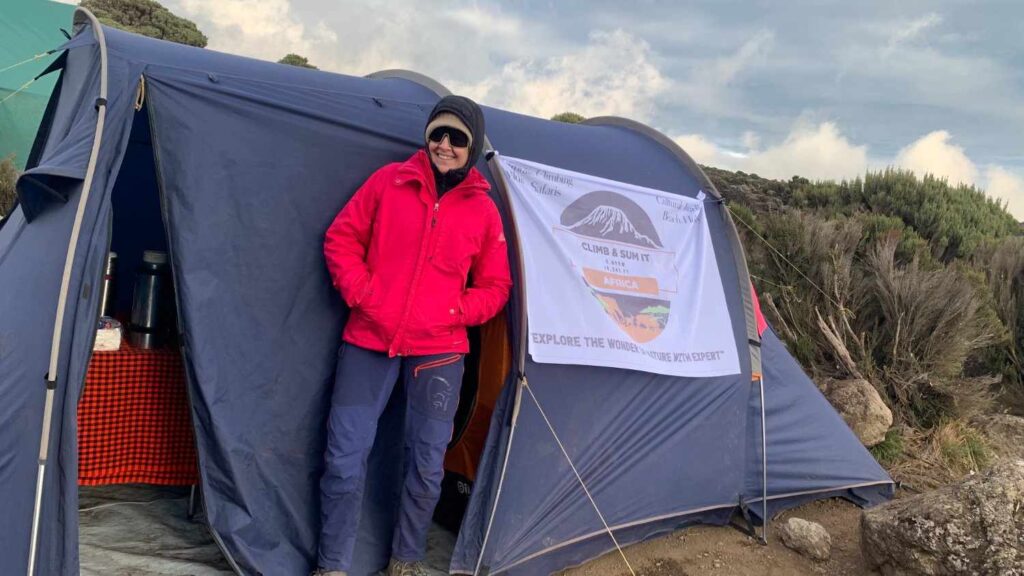
  • 5 nights camping with sleeping tents and a mess tent
  • All meals on the mountain, as listed above
  • Drinking water on the mountain
  • Kilimanjaro National Park, camping, hut & rescue fees
  • Transfers between your hotel in Moshi or Arusha and the park gates
Not included
  • International flights
  • Travel & medical insurance (required)
  • Tips for your mountain crew — we'll share a guideline before the climb
  • Personal climbing gear — ask us about rental options
  • Hotel nights before or after the trek
  • Meals in town and drinks not listed above
  • Souvenirs & personal expenses

Important to know before booking

  • Additional hotel accommodation before and after the trek can be arranged for an extra cost — ask us when booking if you need a night either side.
  • You'll sleep in tents every night, as there are no huts on the Umbwe Route. Facilities on the mountain are basic, so bring your own warm sleeping bag.
  • The Umbwe Route is the steepest route on Kilimanjaro and gains altitude quickly, so the 6-day schedule leaves less time to acclimatise. It is best suited to fit trekkers with previous hiking or altitude experience.
  • Summit night is long and cold, with temperatures well below freezing — warm layers, a headlamp and good boots are essential.
  • Travel insurance that covers trekking up to 6,000 m is required for all climbers.
  • A Tanzania e-Visa is required for most nationalities — apply at immigration.go.tz at least 3 weeks before travel.
  • A yellow fever certificate may be required depending on your transit country. Reaching the summit depends on weather, altitude and fitness and cannot be guaranteed.

what to bring

Your packing list for the climb.

The trek passes from warm rainforest to freezing summit conditions, so layers are the key. Here's what to pack for the 6 days.

Clothing (layers)
  • Moisture-wicking base layers, top and bottom
  • 2–3 quick-dry t-shirts and hiking trousers
  • Fleece or insulated mid layer
  • Warm down or synthetic jacket for summit night
  • Waterproof jacket and trousers
Head, hands & feet
  • Warm hat and a sun hat or cap
  • Neck gaiter or buff and UV sunglasses
  • Thin liner gloves and warm waterproof gloves
  • Waterproof hiking boots, already broken in
  • Wool or synthetic hiking socks, plus warm socks for camp
Gear
  • Headlamp with spare batteries — essential for summit night
  • Trekking poles
  • Daypack (25–35 L) with rain cover
  • Soft duffel bag for the porters to carry
  • Warm sleeping bag for freezing temperatures
  • 2–3 litres of water bottles or a hydration bladder
Health & personal
  • Sunscreen and SPF lip balm
  • Personal first aid kit, blister plasters and any prescription medication
  • Hand sanitiser, wet wipes and toilet paper
  • Energy bars and snacks you enjoy
  • Power bank and camera
  • Quick-dry towel and toiletries
Documents & money
  • Passport and Tanzania e-Visa
  • Travel insurance details covering trekking to 6,000 m
  • Yellow fever certificate, if required
  • Small US dollar notes for crew tips
  • Printed or saved copies of your documents
Camp & evenings
  • Camp shoes or light sandals for the campsites
  • Warm layers for evenings, which get cold at the higher camps
  • Earplugs for windy nights in camp
  • A book, journal or cards for the evenings
  • Zip-lock or dry bags to keep gear dry

Packing tips

  • Your main bag is carried by the porters, while you carry only your daypack. Pack the main bag in a soft duffel, and we'll confirm the weight limit when you book.
  • Dress in layers: the trek moves from warm rainforest to freezing summit conditions, so being able to add and remove layers matters more than any one item.
  • Ask us if you'd rather rent some of the heavier items, such as a sleeping bag, jacket or trekking poles, than bring them.

pricing

What you'll pay — no hidden extras.

OptionPrice per personNotes
6-day Umbwe Route trek
5 nights camping, all meals on the mountain, park fees included
$2,100Per person

Payment & extras

A deposit confirms your booking, with the balance due before departure. Full terms are on our booking policy page.

Additional hotel accommodation before or after the trek can be arranged for an extra cost.

Ready to climb Kilimanjaro?

Reach out and we'll confirm availability for your dates and send you a full quote.

frequently asked questions

Questions we get asked most often.

Where does the trek start and end?

The trek starts at Umbwe Gate on the southern side of the mountain on Day 1, with a pick-up from your hotel in Moshi or Arusha, and ends at Mweka Gate on Day 6 before you are driven back to your hotel.

Where do we sleep on the mountain?

You'll camp in tents every night, at Umbwe Cave, Barranco, Karanga, Barafu and Mweka. Our crew sets up and takes down camp each day.

How hard is the Umbwe Route?

The Umbwe Route is steep from the first day and is one of the more challenging routes, with a shorter acclimatisation profile. No technical climbing is needed, but a good level of fitness and some hiking experience helps. Summit night is steep, cold and long.

Can I add extra nights before or after the trek?

Yes. Additional hotel accommodation before and after the trek can be arranged for an extra cost — just let us know when booking.

Do I need a visa or vaccinations for Tanzania?

Most nationalities need a Tanzania e-Visa, available at immigration.go.tz. A yellow fever certificate may also be required depending on your transit country — check with your doctor or travel clinic before departure.

What's your refund policy?

We recommend taking out travel insurance as soon as you confirm your booking. Full cancellation and payment terms are on our booking policy page.

Related Kilimanjaro Tours you might interested in

Starts from $2,100 per person

6-Day Umbwe Route Trek

Route: Rongai Route
View Package Details
Starts from $2,130 per person

6-Day Rongai Route Trek

Route: Rongai Route
View Package Details
Starts from $2,300 per person

7-Day Rongai Route Trek

Route: Rongai Route
View Package Details
Starts from $3,300 per person

9-Day Northern Circuit Route Trek

Route: Northern Circuit Route
View Package Details
Scroll to Top